
Introduction: The New Era of AI & Automation Has Already Begun
AI & Automation 2025 is already reshaping the world around us. From business processes and healthcare to daily life, intelligent systems are automating tasks, boosting productivity, and redefining how we live and work.
In 2025, AI has expanded far beyond ChatGPT-style tools. Today, we have:
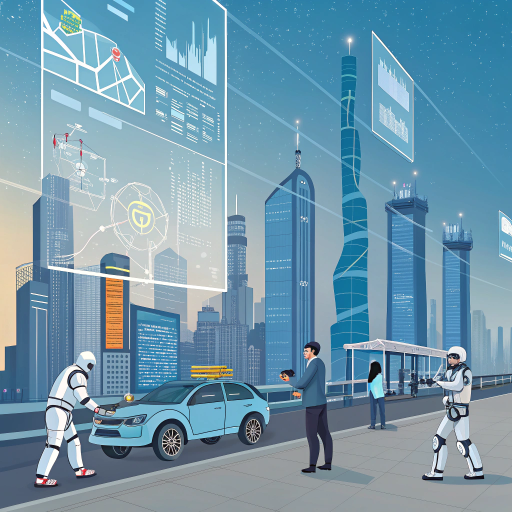
Self-driving autonomous systems
AI-powered business decision engines
Automation robots completing repetitive work
AI agents managing emails, scheduling, customer support
Smart IoT systems automating homes, offices & industries
Generative AI creating designs, marketing assets, content & code
Autonomous factories that run almost without humans
AI-based cybersecurity protection
Predictive analytics powering financial markets
This long, fully SEO-optimized post explains:
What the future of AI & automation looks like
How they are transforming industries
What opportunities and risks exist
What businesses must do to survive
What skills people need for future jobs
This post contains high-value keywords like:
AI tools, automation workflows, machine learning, generative AI, business automation, AI integration, smart robots, autonomous systems, future technology, industry 4.0, digital transformation, AI jobs, automation software, robotic process automation, enterprise AI, predictive analytics, AI trends 2025, etc.
Understanding AI & Automation — Why They Matter Now More Than Ever
What Is AI (Artificial Intelligence)?
AI refers to software that can think, learn, reason, predict, and perform tasks that once required human intelligence.
This includes:
Machine Learning
Deep Learning
Natural Language Processing
Computer Vision
Generative AI
Neural Networks
AI Agents
What Is Automation?
Automation refers to technologies that automatically perform tasks without human involvement.
Examples:
RPA (Robotic Process Automation)
Industrial Robots
AI-based scheduling systems
Workflow automation
Smart home automation
How AI & Automation Work Together
AI + Automation = Autonomous Intelligence
This combination creates machines & systems that can:
Observe
Analyze
Decide
Execute
Improve themselves
This is the secret behind:
Self-driving cars
Autonomous warehouses
Smart factories
AI-driven customer support
Finance automation
AI & Automation Trends Ruling 2025
AI Agents & Autonomous AI Assistants
AI agents are the next big trend.
They complete tasks end-to-end without human help.
Examples:
Booking appointments
Answering emails
Editing & publishing content
Writing code
Managing eCommerce stores
Running marketing campaigns
These AI agents are transforming business productivity.
No-Code & Low-Code AI Automation
People with no programming knowledge can now build:
Automated workflows
Business dashboards
AI chatbots
Automation pipelines
Tools like:
Zapier AI
Make (Integromat)
ChatGPT Agents
ReAct AI
Notion AI
allow non-tech people to automate everything.
Generative AI for Content, Code, Media & Design
Generative AI can create:
Website content
Ads
Logos
Illustrations
Social media reels
Business reports
Full websites
App prototypes
People now generate digital products within minutes.
Autonomous Robotics & Industry 4.0
Factories now use:
Smart robots
Sensor-driven machines
Automated assembly lines
Predictive maintenance
AI-based logistics
This reduces:
Cost
Time
Human error
And increases:
Quality
Safety
Productivity
AI Cybersecurity
Cyber attacks are more advanced than ever.
AI security systems predict attacks before they happen.
AI detects:
Fraud
Malware
Phishing
Intrusions
Suspicious patterns
This is essential for banks, companies, governments & individuals.
How AI & Automation Are Transforming Industries
1. Healthcare Automation
AI helps in:
Medical diagnosis
Predicting diseases
Drug discovery
Hospital management
Patient monitoring
Surgery assistance (robotic surgery)
Example: AI detects cancer earlier than human doctors.
2. Finance & Banking Automation
Banks use AI for:
Loan approval automation
Fraud detection
Algorithmic trading
Customer onboarding
Document verification
Chatbots for 24/7 support
3. Manufacturing Automation
Factories are becoming fully automated:
Smart robots
IoT sensors
Predictive maintenance
Supply chain automation
This reduces downtime & increases output.
4. eCommerce Automation
AI runs:
Inventory
Email marketing
Product recommendations
Order fulfillment
Customer service
Amazon uses thousands of robots in its warehouses.
5. Education & Learning
AI tools create:
Personalized lessons
Smart notes
Real-time doubts solving
AI tutors
Learning analytics
Students learn faster & smarter.
Future Jobs That Will Rise Because of AI & Automation
Top AI-driven Job Roles
AI Automation Engineer
Data Scientist
AI Trainer
Prompt Engineer
Machine Learning Developer
AI Cybersecurity Analyst
Automation Workflow Designer
Robotics Technician
Digital Transformation Consultant
AI Content Designer
Jobs That Will Decline
Automation will replace:
Data entry
Cashiers
Telemarketing
Basic customer support
Low-skill manufacturing
Routine administrative tasks
But new jobs will emerge at the same time.
How Businesses Should Prepare for an AI-Driven Future
Businesses Must:
Adopt AI tools
Automate repetitive processes
Train employees in AI skills
Use generative AI for marketing
Invest in cybersecurity
Upgrade digital infrastructure
Companies that ignore AI will not survive.
Best AI Tools for Automation (2025 Edition)
Content Creation:
ChatGPT
Claude
Gemini
Jasper AI
Automation:
Zapier
Make
Power Automate
Business Automation:
HubSpot
Zoho AI
Notion AI
Video Automation:
Runway ML
Pika Labs
Design Automation:
Midjourney
Canva AI
AI & Automation in Daily Life
Smart home devices
Automated lighting
Smart security systems
Virtual assistants
Personal finance bots
Health tracking AI
Daily routine automation
People save time & increase productivity.
Risks & Challenges
Job displacement
Data privacy
AI bias
Cybersecurity threats
Over-dependence on machines
Tech must be used responsibly.
Conclusion: AI & Automation Are Not the Future — They Are the Present
AI & automation are not simply tools — they are the biggest technological revolution since the internet.
They will reshape:
Work
Business
Education
Healthcare
Lifestyle
Economy
Those who adopt AI early will lead the future.